


Increase Your Fico Score Using Authorized User Tradelines!
Have a question
Finance provides the latest financial news, market analysis, and investment insights. We cover stocks, cryptocurrency, real estate, and personal finance tips to help you make informed decisions and achieve financial success. Stay updated with us!
Have a question
Address
Email us









Our experts will review your goals, recommend the best tradeline packages, and create a customized strategy to put you on the fast track to success.

Tradelines for Sale – Authorized User Tradelines allow individuals to benefit from the established credit history of a well-managed secured credit card or traditional credit card account without being the primary account holder. Once added as an authorized user, important account information—such as account age, total credit limit, credit utilization ratio, and positive payment activity—may begin reporting on the authorized user’s credit report.
Because major credit reporting agencies including Experian, TransUnion, and Equifax factor authorized user accounts into personal credit files, positive account activity can strengthen an overall credit profile and influence credit scores. Strong accounts showing low balances, consistent payments, and a high credit limit may contribute to improved credit utilization, which is a major factor in most scoring models.
For those researching Tradelines for Sale or preparing to buy tradelines, this approach allows users to leverage established account history from another individual. Some individuals purchase placements specifically to improve overall credit age, reduce high balances, and position themselves more competitively when they apply for new financing.
When the primary cardholder maintains on-time payments and low balances, those positive behaviors can carry over and support stronger credit scores, improved approval odds for a car loan, better positioning for a mortgage, and enhanced opportunities to build credit responsibly. In some cases, seasoned accounts may also assist individuals seeking to expand into business credit or prepare for future business financing needs.
For entrepreneurs or self-employed individuals, properly structured tradelines can complement early business tradeline activity and vendor relationships when working to build business credit with major business credit bureaus.
Getting added to an Authorized User Tradeline is a structured yet simple process:
The process begins by choosing an authorized user tradeline that aligns with your credit goals. Key factors include the account’s age, total credit limit, issuing bank, utilization level, and payment history. Seasoned credit card accounts with long histories, low balances, and consistent on-time payments typically deliver the strongest impact. Because reporting practices vary by issuer and credit bureau, selecting the right tradeline is critical.
Once a tradeline is selected, basic personal details are provided so the issuing bank can add you as an authorized user. This usually includes your full legal name, date of birth, and in some cases your current address. In most situations, a Social Security number is not required for authorized user placement.
After the information is submitted, the primary account holder’s bank adds you as an authorized user to the credit card account. At this stage, no ownership or payment responsibility is transferred—the account remains fully managed by the primary cardholder.
Once added, the issuing bank reports the account during its next billing cycle or statement closing date. This is when the authorized user tradeline begins the reporting process. Depending on the bank, the tradeline typically appears on your credit report within 7 to 15 days after the statement closes.
The final step is verification. Using a credit monitoring service allows you to confirm that the tradeline has posted, is reporting accurate account details, and appears on the appropriate credit bureaus. For individuals researching Tradelines for Sale, this step ensures the tradeline is functioning as intended and contributing to the credit profile.
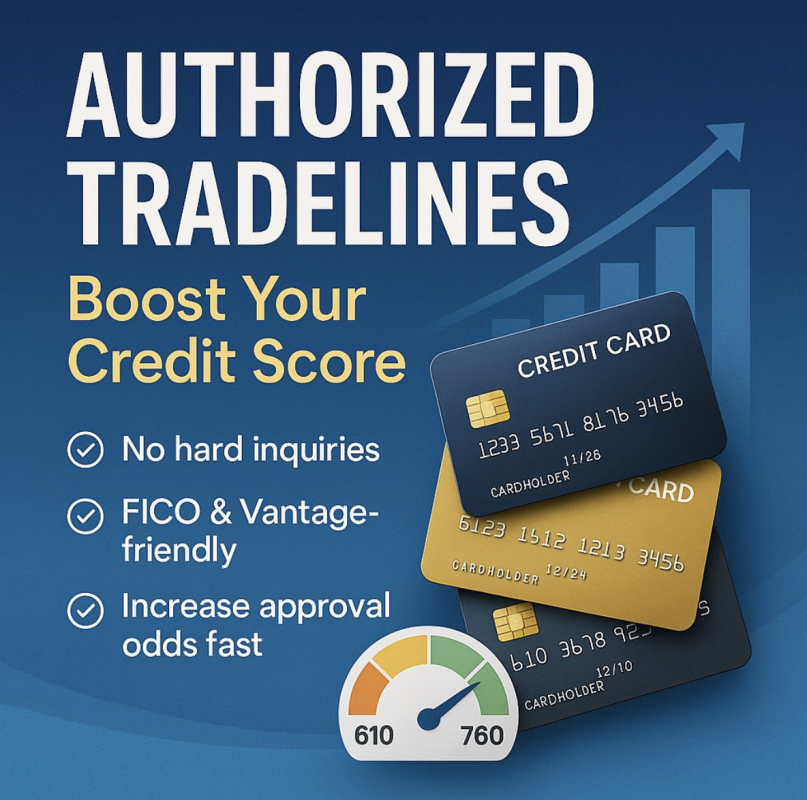
Authorized User Tradelines do not post instantly, but the timeline is relatively fast compared to opening a new account or applying for additional new credit. In most cases, once you are added as an authorized user, the issuing bank reports the account during its next billing cycle or statement closing date. This is when the tradeline officially begins the reporting process.
After the statement closes, the authorized user tradeline typically appears on your credit report within 7 to 15 days, depending on the bank’s reporting schedule and how quickly the major credit reporting agencies process the update. Some issuers report faster than others, which is why posting times can vary.
Once the tradeline posts, updated account information—including credit age, credit limit, balances, and credit utilization ratio—is incorporated into your file. Because most scoring models respond as new data is added, changes to your credit scores may be visible shortly after the tradeline appears.
Factors such as overall credit utilization, history of late payments, existing high balances, and total credit age all influence how much impact the tradeline has on your score. For individuals who purchase placements or work with a structured tradeline company, understanding this timing helps set realistic expectations.
For those seeking a quick boost before they apply for financing—such as a car loan, mortgage, or other personal or business funding—the relatively short posting window is one reason many choose to buy tradelines rather than open additional primary accounts that may involve annual fees, interest charges, or long approval timelines.
While results vary based on the strength of the account and the existing file, authorized user placements are commonly used to add seasoned history, reduce credit utilization, and improve overall credit scores more quickly than traditional methods used to build credit.
Tradelines for sale typically refer to Authorized User Tradelines, where individuals are added as authorized users to established credit card accounts with positive history. These accounts may report factors such as age, credit limit, and payment history to the buyer’s credit report. While the phrase is widely used online, authorized user tradelines are the only type of tradelines that can be legitimately offered for sale.
Clients can legally buy authorized user tradelines, as credit card issuers allow account holders to add authorized users to their accounts. However, primary tradelines cannot be legally sold or transferred. Any offer advertising “primary tradelines for sale” is a red flag and often associated with scams, closed accounts, or fraudulent reporting.
Wholesale tradelines refer to authorized user tradelines offered at bulk or discounted pricing, usually intended for brokers, vendors, or resellers who place tradelines for multiple clients. Wholesale access allows businesses to work directly with tradeline inventory rather than purchasing single placements at retail pricing.
Wholesale tradelines are best suited for:
Credit consultants
Tradeline brokers or vendors
Credit repair companies
Funding or financial service providers
Clients looking to buy tradelines for personal use typically purchase retail placements, while wholesale tradelines are designed for professionals placing tradelines for others.
Clients looking to buy tradelines should focus on:
Account age and credit limit
Low utilization and perfect payment history
Reputable providers with posting guarantees
Clear expectations on reporting timelines
Credit bureau coverage (Experian, TransUnion, Equifax)
Avoid sellers offering unrealistic guarantees or claiming to sell primary tradelines.
No tradeline can guarantee a specific credit score increase. The impact of tradelines for sale depends on the strength of the account, the buyer’s existing credit profile, and how the tradeline affects utilization, age, and overall credit mix. Authorized user tradelines are commonly used to support credit improvement, not replace responsible credit behavior or primary accounts.
The cost of tradelines for sale varies based on several factors, including the age of the account, credit limit, issuing bank, and expected bureau reporting. Retail buyers usually pay per tradeline, while wholesale tradelines are priced lower per placement due to volume. Higher-limit, seasoned accounts generally cost more because they tend to have a stronger impact on credit profiles.

Credit cards and lines of credit that report ongoing balances and usage.

Accounts with fixed payments over time, such as student loans or personal loans.

Vehicle financing tradelines that show a proven history of on-time payments over time.

Mortgage tradelines that contribute meaningful weight to a credit profile when handled properly.

Store-branded credit cards can also play a role by adding variety to your overall credit mix. Each type of tradeline impacts your credit profile in a different way, and maintaining a balanced combination of revolving accounts and installment loans helps create a more well-rounded and stable credit history.
For individuals researching Tradelines for Sale, the goal is usually the same: improve credit standing, add positive history, and increase approval odds. Tradelines are credit accounts that appear on a credit report, and when used strategically, they can play an important role in building or restoring credit. From AU Tradelines to wholesale tradelines, understanding how tradelines work—and who they are best suited for—helps clients make informed decisions when building tradeline credit for personal use.
Tradelines for personal credit refer to credit accounts that report to an individual’s credit file and influence credit scores. These accounts may include credit cards, loans, or lines of credit, but in the context of Tradelines for Sale, the focus is typically on Authorized User (AU) Tradelines.
AU Tradelines allow an individual to be added as an authorized user to an established credit card account. When reported, key details such as account age, credit limit, utilization, and payment history may appear on the authorized user’s credit report. This can help strengthen tradeline credit by adding seasoned history without opening a new primary account.
For many clients looking to buy tradelines, AU Tradelines offer a practical way to enhance personal credit profiles while continuing to build primary credit over time.
Authorized user accounts have existed for decades as a way for families to share credit access. Historically, parents added children to credit cards to help them establish early credit, while spouses or partners shared accounts for convenience. Over time, lenders and credit bureaus continued to recognize authorized user accounts as part of a consumer’s credit profile.
After major economic events—such as the 2008 financial crisis and the COVID-19 recession—AU Tradelines became more widely used as a credit-building strategy. Many consumers experienced layoffs, foreclosures, or credit damage during these periods and sought faster ways to rebuild their profiles. Authorized user tradelines emerged as a tool to add positive reporting history during recovery phases, especially when traditional lending was more restrictive.
AU Tradelines often go hand in hand with credit repair efforts. While credit repair focuses on disputing inaccuracies and resolving negative items, tradelines help rebuild positive data. This combination allows individuals to remove harmful information while simultaneously adding strong tradeline credit.
This approach has been used by:
Individuals recovering from financial hardship
People burdened by student loan debt
Veterans transitioning back into civilian life
Ex-felons rebuilding credit after reentry
Consumers impacted by economic downturns like 2008 and COVID-19
For these groups, tradelines for personal credit can help restore credibility, demonstrate responsible credit behavior, and improve access to financial opportunities.
Wholesale tradelines are typically offered to brokers, consultants, and businesses that place AU Tradelines for multiple clients. Instead of purchasing individual placements at retail pricing, wholesale access allows professionals to serve clients looking to buy tradelines more efficiently.
Clients seeking tradelines for sale usually fall into two categories:
Individuals looking to improve personal credit quickly and responsibly
Businesses or consultants sourcing wholesale tradelines for resale or placement
In both cases, AU Tradelines remain the most legitimate and widely accepted option. Unlike primary tradelines, which must be built over time, authorized user tradelines can be added through established processes that comply with issuer rules.
Tradelines for Sale—when referring to AU Tradelines—are a long-standing credit strategy rooted in consumer credit history. Whether used for personal recovery, credit repair, or post-hardship rebuilding, tradelines for personal credit have helped countless individuals regain financial footing. When combined with responsible credit habits and legitimate providers, AU Tradelines and wholesale tradelines continue to play a meaningful role for clients looking to buy tradelines and strengthen their credit profiles.
Our specialists take the time to understand your goals, evaluate your needs, recommend the most effective tradeline packages, and design a personalized strategy to help you move quickly toward success.
Authorized user tradelines are existing credit card accounts where someone is added as an authorized user. When reported, detailed account information—including credit age and positive payment history—may appear on the authorized user’s credit report through major credit reporting agencies, helping strengthen overall credit history and improve credit scores.
AU Tradelines can support credit improvement by adding seasoned tradelines and increasing available credit. These factors may help improve credit utilization, strengthen overall credit tradelines, and positively influence credit scores, especially for individuals with thin files or those recovering from bad credit.
Many individuals purchase placements when they want to build credit, improve their credit utilization ratio, or prepare to apply for a car loan, mortgage, or other financing tied to personal or business goals.
Most authorized user tradelines post after the issuing bank’s next statement closing date. In many cases, reporting occurs within 7 to 15 days, depending on the bank and how lenders report credit activity to major credit reporting agencies and business credit bureaus.
Authorized user tradelines may contribute to movement in your credit scores once they post, depending on the strength of the account and the condition of the existing file. Results vary, but many people see improvement when strong credit tradelines are added correctly and help build credit through reduced credit utilization and consistent reporting of payments.
There is no guaranteed point increase. Some files see modest movement, while others experience larger changes. Profiles with high balances, limited credit age, or prior late payments may respond differently.
Individuals who buy tradelines or explore purchasing tradelines should understand that results depend on total credit history, overall credit utilization ratio, and how existing accounts are managed.
The phrase Tradelines for sale typically refers to authorized user placements on established credit card accounts issued by a credit card company. It does not mean ownership of the account is transferred, only that access to reporting history is provided.
Many people researching how to buy or purchase seasoned tradelines do so to improve personal profiles or support efforts to build business credit through complementary business tradeline strategies.
Consumers can legally buy tradelines when they are authorized user tradelines added in accordance with issuer rules and properly report credit activity through major credit reporting agencies.
Legitimate providers do not transfer ownership of accounts or misrepresent the account type. Individuals should work with a reputable tradeline company to ensure placements are structured correctly.
No. Primary tradelines for sale are a red flag. Primary accounts must be applied for and opened by the individual. Legitimate providers do not sell ownership of primary credit accounts or misrepresent the account type being offered.
Opening a true primary account often involves a formal application process, potential annual fees, possible interest charges, and approval standards tied to your overall creditworthiness.
Wholesale tradelines are authorized user tradelines offered at volume pricing, typically for brokers or companies placing accounts for multiple people. These programs may include structured tradelines purchase options or bulk purchasing tradelines arrangements.
Wholesale placements are often designed for professionals assisting clients with personal credit needs, expansion of business credit, or strategic use of a business tradeline alongside vendor relationships.
Wholesale tradelines are best suited for credit consultants, funding professionals, and service providers working with multiple clients, including those focused on expanding business credit strategies and helping clients build business credit.
Individual consumers typically buy single placements rather than engaging in bulk purchase models.
Authorized user tradelines are often used alongside credit repair. While credit repair focuses on addressing negative or inaccurate items, tradelines add positive reporting that can strengthen credit history and support rebuilding damaged credit accounts.
Some individuals choose to buy tradelines or explore purchasing tradelines as part of a broader plan to build credit and restore stability after financial setbacks.
After job loss, medical issues, student loan strain, or economic events like the 2008 recession or COVID-19, tradelines for personal credit can help reintroduce positive reporting, improve overall credit scores, and demonstrate responsible credit behavior while working toward good credit.
In some cases, individuals seeking to improve their finances may purchase placements to reduce credit utilization and rebuild momentum toward stronger approvals.
A Credit Privacy Number is often discussed by individuals who believe their personal credit file cannot move forward. Some people use CPNs in place of an SSN during credit repair or while preparing for major financial steps involving personal or business credit.
Consumers should carefully evaluate their long-term financial goals and ensure they understand how reporting through business credit bureaus or other systems may impact future credit opportunities.
Some individuals explore CPNs when seeking approvals for apartment rentals, utilities, checking accounts, or cell phone services while rebuilding personal or business credit.
Anyone considering this route should fully understand the legal and financial implications before proceeding and ensure all account information is accurate when applying for housing or other services.
Tradelines are used by a wide range of people, including veterans, individuals recovering from financial hardship, those managing student loans, and clients looking to buy tradelines as part of a broader strategy to build credit or strengthen business financing efforts.
Entrepreneurs may also use structured placements in combination with a business tradeline to support efforts to build business credit responsibly.
We’ve been in business for 15 years, and our team takes the time to understand each client’s specific credit needs. Whether someone is researching Tradelines for sale, wants to buy tradelines, or is preparing to purchase placements to build credit, we guide clients through the process with clarity and transparency.
For entrepreneurs, we also support strategies to build business credit, structure a business tradeline, and align placements with long-term financial goals that strengthen both personal and business credit foundations.
Yes. Authorized user tradelines are often most effective for thin or newly established files because they add immediate depth, improve overall credit age, and strengthen reporting across existing credit accounts.
For individuals seeking to build credit, add seasoned tradelines, or improve their credit utilization, these placements may help create a stronger-looking profile before they apply for a car loan, mortgage, or other financing.
They can. When AU Tradelines have a high credit limit and low balances, they may significantly lower your overall credit utilization ratio, which is a major factor in most scoring models.
Reducing high balances while increasing available credit may contribute to stronger credit scores and improve your position when you apply for new financing.
Tradelines for personal credit are typically a support strategy, not a permanent replacement for owning credit. Many individuals purchase or buy tradelines to achieve a short-term improvement, such as a quick boost before submitting a loan application.
Long-term stability comes from responsibly managing primary accounts, reducing debt, maintaining consistent payments, and working toward sustainable good credit.
Clients should avoid sellers promising guaranteed results, instant approvals, or ownership of accounts. Offers advertising primary tradelines for sale or misrepresenting the account type should be approached with caution.
Consumers looking to buy tradelines, purchase seasoned tradelines, or explore a structured tradelines purchase should work with a reputable tradeline company that operates transparently and aligns with legitimate credit practices.
Yes. Many credit strategies combine AU Tradelines with newly opened secured or unsecured primary accounts. This approach allows individuals to benefit from seasoned tradelines while actively working to build credit and expand their mix of revolving credit and installment accounts.
For entrepreneurs, combining personal placements with a structured business tradeline strategy may also help build business credit through responsible reporting and vendor relationships.
Primary tradelines show direct responsibility and repayment behavior, which lenders value for long-term lending decisions such as a car loan or mortgage.
While AU Tradelines can support credit scores, lenders often rely more heavily on accounts where the applicant is the responsible cardholder, especially when evaluating larger loans tied to specific underwriting standards and overall creditworthiness.
No. CPN Packages are often discussed by individuals facing credit challenges, but they are not intended to replace personal credit indefinitely or substitute legitimate credit accounts.
Long-term success typically involves rebuilding damaged profiles, strengthening overall credit history, and continuing efforts to build credit responsibly toward sustainable good credit.
Our team takes a consultative approach. With 15 years in business, we help clients evaluate their credit needs, understand how credit scores are impacted, and determine whether to buy tradelines, purchase placements, or pursue other structured options.
We also assist entrepreneurs seeking to build business credit, structure a compliant business tradeline, and align decisions with long-term financial goals across both personal and business credit strategies.
Authorized User Tradelines are commonly used to strengthen credit profiles by supporting higher credit scores and improving overall financial credibility. For individuals building credit from the ground up, recovering from past challenges, or aiming to increase approval odds, tradelines can add meaningful account age, boost available credit, and introduce positive payment history—key factors lenders and creditors evaluate when reviewing applications.
Our experts will review your goals, recommend the best tradeline packages, and create a customized strategy to put you on the fast track to success.